

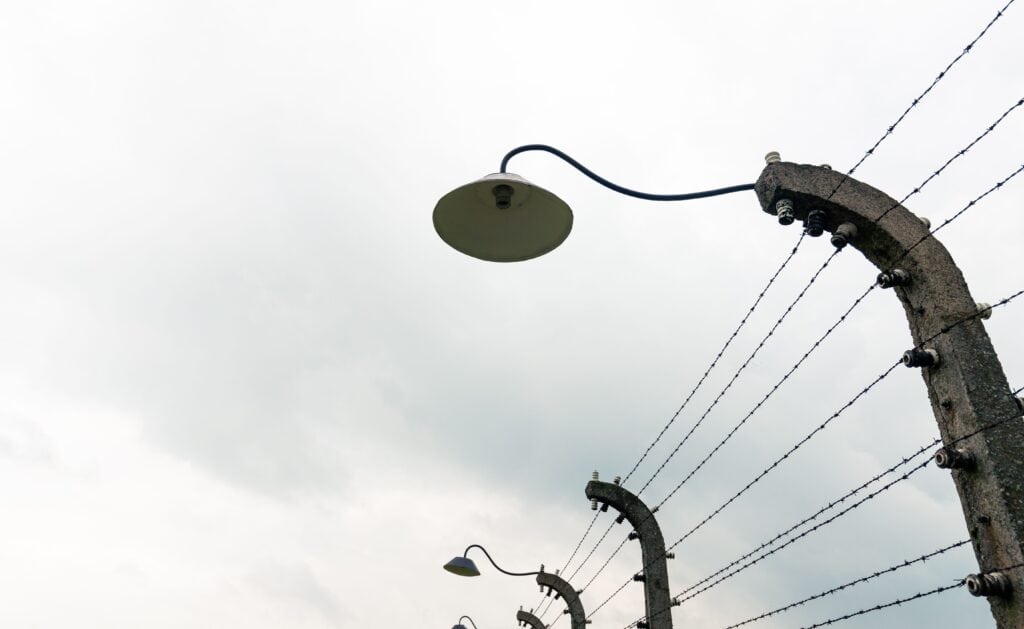
Correctional and detention facility fencing must help prevent escapes and unauthorized access, as well as support the safe movement of vehicles and people through access points. For high-security facilities, a single fence may not provide sufficient protection, which is why many facilities use multiple barriers with electronic surveillance to provide additional security. DK Security Solutions understands that correctional facility fencing must be designed and installed with close attention to security classifications and legal standards.
How Is a Correctional Facility Perimeter Secured?
A correctional facility perimeter is secured using multiple layers of security measures, like fencing, gates, cameras, detection equipment, and security response procedures. How these elements are combined and used depends on the facility’s custody level and specific risks.
Fencing creates resistance to unauthorized movement, while detection technology can help identify suspicious activity. No individual component should be expected to perform all security functions on its own.
Why Do Correctional Facilities Use Multiple Layers of Security Fencing?
Some high- and medium-security correctional facilities install multiple fencing layers to create more physical separation and more opportunities for surveillance and security patrols. In a double-fence arrangement, two independent barriers establish separate lines of containment. The space between them can be used as a monitored security zone where security personnel can patrol or additional intrusion detection systems can be installed. If one fence is compromised, the second provides another obstacle to intrusion or escape, giving security personnel time to respond to the situation.
Additional perimeter protection can include lighting, electronic alarms, cameras, and anti-climb components. Each of these components serves a different purpose within perimeter security. Lighting and cameras support observation, while anti-climb equipment delays breach.
What Fencing Materials Are Used at Correctional and Detention Facilities?
Correctional facility fencing is normally made with heavy-duty steel engineered to resist climbing and tampering. Structural strength of the complete fencing system is just as important as the material itself.
358 Welded-Mesh Fencing
358 welded-mesh fencing is often used in high-security environments because it has narrow openings that make it hard to establish hand and footholds. The designation refers to a mesh configuration with approximately 3-inch by 0.5-inch openings and 8-gauge wire. The closely spaced welded wires make it hard to climb the fence while maintaining visibility through the barrier.
Anti-Climb Toppings and Reinforced Components
Some correctional facilities may use anti-climb toppings like razor ribbon or barbed wire to deter climbing.
What Standards Apply to Correctional Facility Fencing?
There is no single national fencing specification that applies to every prison or detention center. Correctional facility fencing must satisfy the standards applicable to the institution, which may include correctional accreditation requirements, state regulations, agency specifications, and ATSM standards. Before installing fencing, facility owners and contractors must identify which requirements or regulations apply to the project.
How Do Security Gates and Intrusion Detection Fit into the Perimeter?
Security gates and intrusion detection systems extend the protection provided by fencing. Gates manage access, while electronic detection helps personnel identify potentially suspicious activity.
Correctional facilities often use controlled entry points called sally ports. These access points use successive gates to help maintain a secure perimeter during authorized passage.
Intrusion detection systems are used to identify unauthorized activity along a perimeter. Fence-mounted sensors, cameras, and alarms can detect and alert security personnel to a potential problem.
The perimeter security system needs to be considered as a whole, rather than individually. A secure fence with poorly functioning gates or surveillance cameras placed in the wrong spot creates an operational weakness.
How Can Correctional Facilities Balance Security With Life Safety?
Correctional perimeter security must maintain containment while still meeting fire safety and emergency access requirements. Emergency planning is particularly important at controlled entrances. Facilities must establish how emergency responders can access secure areas when necessary without creating uncontrolled openings.
Correctional facilities also have unique evacuation considerations. Movement during an emergency like a tornado or hurricane may need to go through designated secure routes or into protected containment zones.
These needs should influence gate placement and access control systems and should be part of the broader correctional facility security plan.
What Should Facility Managers Consider When Planning or Upgrading Correctional Fencing?
Before replacing or expanding correctional facility fencing, project managers should assess the existing perimeter and identify any requirements the new system must meet. Look for damaged fencing or weakened posts that need immediate attention. Project planning should also account for the institution’s applicable standards before moving forward with installation.
Working with a contractor experienced in high-security fence installation can help facility managers evaluate their options and ensure they meet institutional requirements.
Correctional Facility Fencing From DK Security Solutions
Correctional perimeter protection requires reliable installation and a system that works together. Every fence, gate, camera, light fixture, and piece of detection equipment must suit the institution’s operating conditions and requirements.
DK Security Solutions provides high-security fencing and gate installation for commercial, industrial, and institutional facilities nationwide. Our team can help evaluate existing perimeter infrastructure and discuss security improvements suited to your facility.
Contact DK Security Solutions to schedule a free consultation and discuss your correctional facility’s perimeter security requirements.