

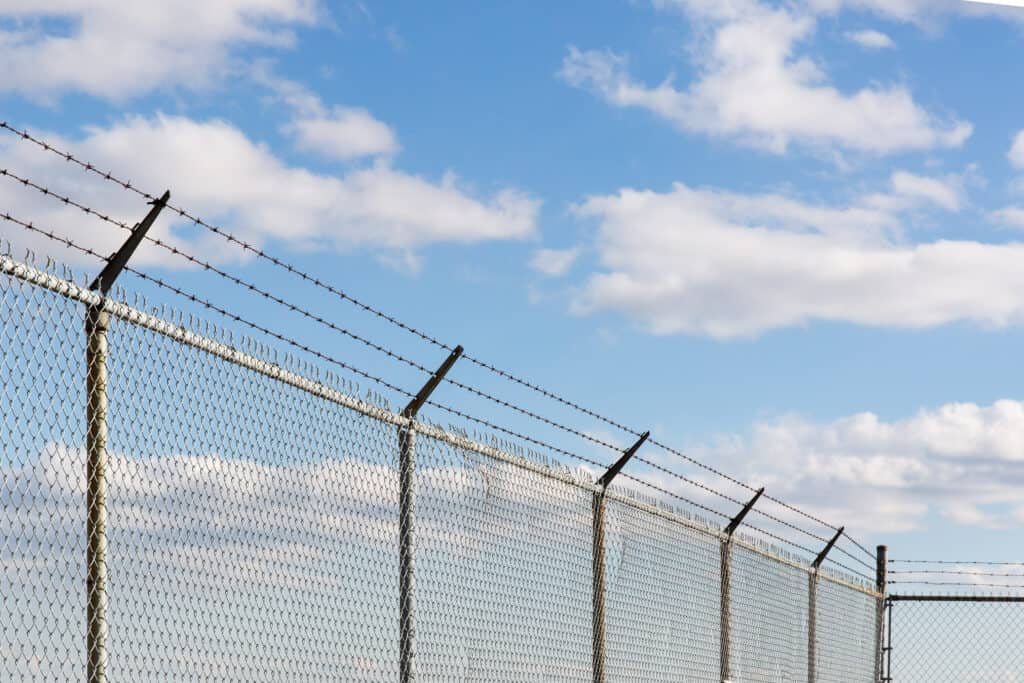
High-security perimeter fencing is a purpose-built barrier system designed to deter and delay unauthorized entry at commercial and industrial sites, not just mark a property line. Unlike standard commercial or residential fencing, it’s engineered against deliberate attempts to climb or cut through it, and it’s typically designed to work alongside separate detection and access-control technology rather than provide that function itself. For facility managers weighing an upgrade, understanding what separates a true high-security system from a basic chain-link fence is the first step toward a sound investment. DK Security Solutions breaks down what the category covers, where it’s commonly used, and how it fits into a broader security plan.
What Makes Fencing “High-Security”
The difference between standard fencing and high-security fencing comes down to intent and engineering. A residential or light commercial fence is built to define a boundary and offer a basic visual deterrent. A high-security perimeter is built to withstand a determined intruder, which means every component, from the fabric to the posts to the gate hardware, is selected and installed to resist forced entry rather than simply mark where the property ends.
That distinction shows up in the specifications, and there’s no single spec that applies across the board. The site’s threat level shapes high-security fencing requirements, the applicable standards, and the owner’s or agency’s own security requirements, which is why one facility’s fence can look very different from another’s even within the same industry. Facility managers weighing an upgrade often want to know what the installation process itself involves before committing to a project. The goal isn’t just a taller fence. It’s a system with no easy failure point.
Core Attributes of a High-Security Perimeter
Most high-security perimeter systems share a handful of common attributes, though specific requirements vary by threat level, site type, and applicable standards. Anti-climb features, such as reduced foothold mesh patterns or curved toppings, make scaling the fence difficult without specialized equipment. Anti-cut fabric resists bolt cutters and hand tools long enough to slow an intruder down, and fence height is typically increased beyond standard commercial specifications to reduce the odds of a successful climb-over.
Vehicle threats and intrusion detection are generally addressed separately from the fence line itself. Reinforced posts or heavier fence materials aren’t automatically rated to stop a vehicle; where that risk exists, facilities typically pair their perimeter with tested, crash-rated barriers, such as bollards, crash-rated gates, cables, or beam barriers. Detection works the same way: the fence itself doesn’t sense an intrusion, but a well-designed perimeter is built to support cameras, sensors, alarms, and gate access control options like keypads, card readers, and remote monitoring layered on top of it. DK Security Solutions installs fencing designed to integrate cleanly with those systems from the start.
Where High-Security Perimeter Fencing Is Commonly Used
High-security perimeter fencing is most commonly found at utilities and substations, data centers, correctional facilities, government properties, and industrial or manufacturing sites. These facility types tend to carry a higher consequence for a breach, whether that’s a safety risk, a service disruption, or regulatory exposure, which is part of why the fencing is common in these settings. Facility type alone, though, doesn’t determine what’s required.
The actual specification for a given site depends on its threat level, applicable regulations, owner or agency standards, and the findings of a formal security assessment. Two facilities in the same industry can end up with very different fencing requirements depending on those factors. DK Security Solutions works through that assessment process directly with facility managers rather than applying a one-size-fits-all recommendation.
How Perimeter Fencing Fits Into a Layered Security Strategy
No fence, regardless of how well it’s built, is a complete security plan on its own. Security professionals typically think in terms of a layered approach: deter, detect, delay, and respond. Perimeter fencing plays a direct role in two of those stages, deterring casual attempts by signaling that a site is hardened, and delaying a determined intruder long enough for a response to be triggered.
Detection and response come from systems layered around the fence, not the fence itself- things like cameras, sensors, alarms, and monitoring services that flag activity in real time. A well-designed perimeter supports that integration cleanly, but its core job is to deter and delay. The fence is the foundation the rest of the layered approach is built on, which is why the fencing contractor a facility chooses matters as much as the fence itself.
Standards and Materials at a Glance
Facility managers researching this topic will run into a range of standards and material options, from specific mesh gauges to particular barrier certifications. Those details matter, but they’re specific enough to warrant their own discussion rather than a quick overview here. The right combination depends on the site’s threat level, applicable standards, owner or agency requirements, and budget.
The short version is that no single material or standard is universal. A substation and a distribution warehouse may both need high-security fencing. Still, the right specification for each can look very different once threat level and regulatory requirements are factored in. DK Security Solutions will cover specific materials and standards in more depth in upcoming articles, so facility managers evaluating options now should treat this as a starting point rather than a final answer.
Start With a Free Site Assessment
Every high-security perimeter starts with understanding the specific risks at a given site, not a one-size-fits-all recommendation. DK Security Solutions offers a free consultation and site assessment for facility managers and security directors ready to evaluate their current fencing or plan a new installation, including automated gate systems designed and installed by a team holding CGAT (Certified Gate Automation Technician) and CGAD (Certified Gate Automation Designer) credentials through the American Fence Association. Schedule a free consultation to talk through your site’s requirements.